Bosporus Neighbourhoods, From Beşiktaş to Anadolu Kavağı, and the Politics Behind Each Shore
Istanbul's waterfront neighbourhoods are often described as villages, and from a ferry they look like it: mosques by the water, wooden houses, fishing boats, tea gardens. They are also some of the most politically charged postcodes in Turkey. Here is the strait shore going north from the city centre, with what each place is and what it says about the country.
The European shore
Beşiktaş is where the Bosporus proper begins, with Dolmabahçe Palace on one side and the ferry piers and fish market on the other. Its football club's fan group, Çarşı, made itself famous in the 2013 Gezi protests, when Beşiktaş supporters fought police alongside students a few streets away in Taksim. In 2015, 35 Çarşı members were put on trial accused of plotting a coup by joining the protests. They were acquitted. The charge itself told you how Erdoğan's government saw a park protest.
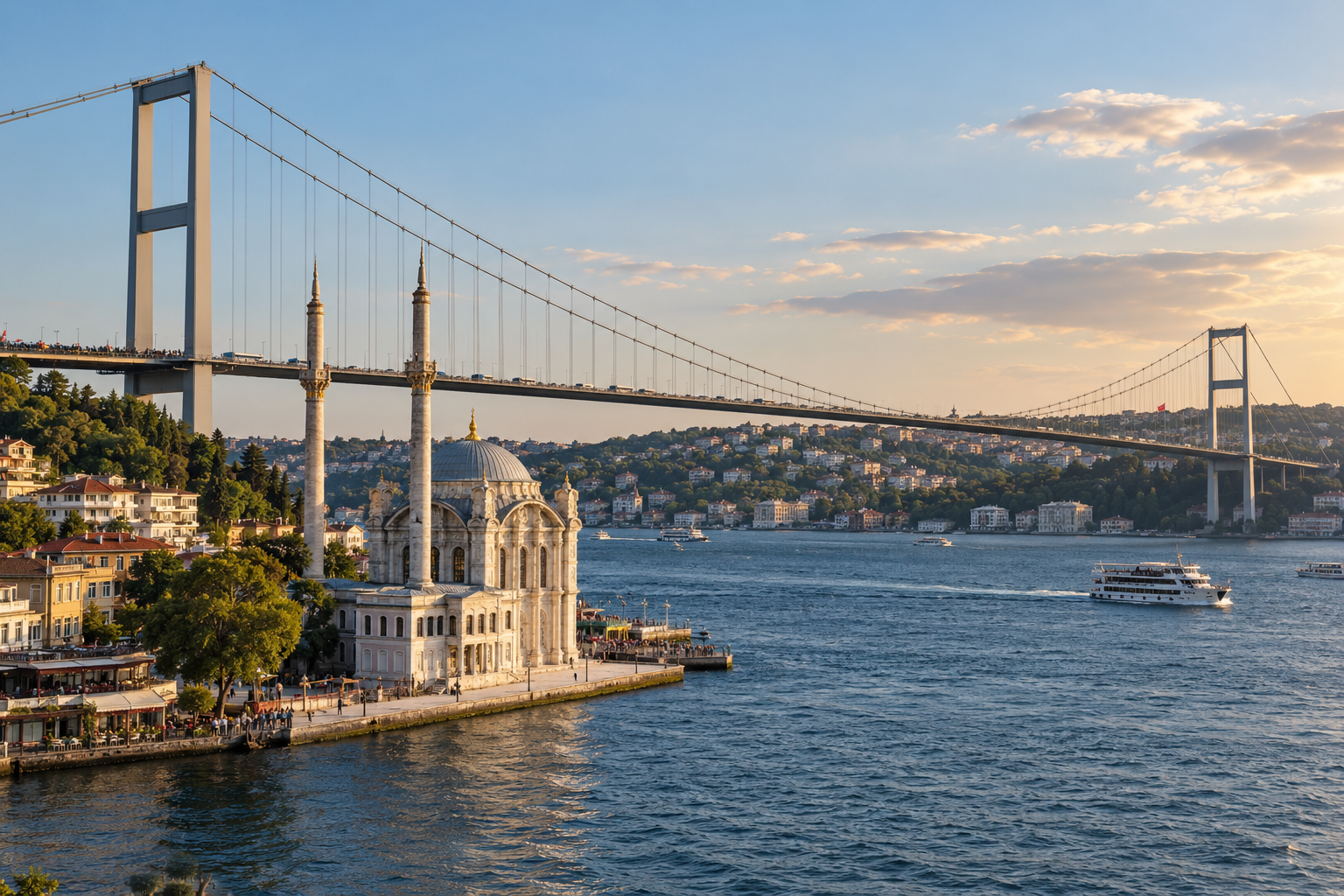
Image: pxef.com
Ortaköy, just south of the first bridge, is the most photographed spot on the strait: a small Baroque mosque on the water with the bridge behind it. In the first hour of 1 January 2017 a gunman sent by the Islamic State attacked the Reina nightclub here and killed 39 people, most of them foreigners.
Arnavutköy keeps the best row of 19th-century wooden houses on the strait and an old Greek Orthodox church. Its Greek community, like those of Kuruçeşme, Tarabya and other shore villages, was largely driven out of Istanbul by the 1955 pogrom and the 1964 expulsions. The houses survived. Most of the people who built them didn't stay.
Bebek is the strait's money: cafés, a marina, a waterfront mosque and some of Turkey's most expensive flats. Above it, on the hill, is Boğaziçi University, scene of the 2021 protests against a rector Erdoğan imposed by decree (see the fortresses). Rumeli Hisarı, the fortress village, comes next, then Emirgan, with its park and its April tulip festival, and Yeniköy and Tarabya, where European embassies once kept summer residences in yalı mansions; some still do.
Sarıyer is the last big district before the Black Sea, known for its fish market and the börek bakeries of its main street. Beyond it Rumeli Kavağı is a fishing village almost at the strait's mouth, with ferries across to Anadolu Kavağı and fish restaurants on the quay.
The Asian shore
Üsküdar faces the old city across the water and is one of Istanbul's most conservative districts, full of Ottoman mosques. Erdoğan's private home is in Üsküdar's Kısıklı quarter, and the district has long been an AKP stronghold. In March 2024, as the party lost much of Istanbul, Üsküdar fell to the opposition for the first time in thirty years.
Kuzguncuk is the strait's picture of what Istanbul used to be: a mosque, an Armenian church, a Greek church and a synagogue within a few minutes' walk of one another, in a valley of painted wooden houses. Çengelköy has the strait's best-known waterfront tea garden and the Vahdettin Pavilion, an Ottoman mansion restored as a presidential residence and office for Erdoğan.
Kandilli is home to the Kandilli Observatory, which monitors earthquakes for the region. Its readings matter more than anything else in Istanbul: scientists expect a major earthquake on the North Anatolian Fault under the Sea of Marmara, a magnitude 6.2 shock in April 2025 was a reminder, and much of the city's housing was built with little regard for the codes. After the February 2023 earthquakes killed more than 50,000 people in Turkey's south, the government's long record of construction amnesties and lax enforcement came under heavy attack.
Kanlıca is famous for its yogurt, eaten with powdered sugar at the cafés by the pier. Beykoz, with its old glass and leather trades, is the most rural district on the strait. At the end, Anadolu Kavağı sits below the ruins of Yoros Castle, a Byzantine and Genoese fortress with a view straight out into the Black Sea and the ships waiting to come in (traffic and transit rules).
Seeing them
The shore road on the European side runs almost unbroken from Beşiktaş to Sarıyer and is best walked in stretches, Ortaköy to Bebek being the classic. The Asian side is hillier and quieter. The long Bosporus ferry (the ferry guide) stops at several of these places, and the commuter ferries link both shores many times an hour.
Every one of these neighbourhoods has a fish restaurant, a mosque and a view. Most of them have a political story too.