Bosporus Palaces and Yalı Mansions, Dolmabahçe, Beylerbeyi and the Price of Imperial Vanity
The Ottoman sultans moved down to the water in the 19th century. For nearly four hundred years they had ruled from Topkapı, a cluster of pavilions on the hill above the strait's mouth. Then, as the empire lost wars and territory, they spent fortunes on European-style palaces along the Bosporus shore. The buildings are still there, and they still say a lot about how Turkish rulers spend money.
Dolmabahçe, the palace that helped break the treasury
Sultan Abdülmecid I built Dolmabahçe between 1843 and 1856 on filled-in land at Beşiktaş (the name means "filled garden"). It runs for about 600 metres along the European shore: a mix of Baroque, Rococo and Ottoman, with crystal chandeliers, a staircase with crystal balusters and a ceremonial hall under a dome hung with a chandelier that weighs about four and a half tonnes. Gilding was used on a scale Europe's royal courts rarely matched.
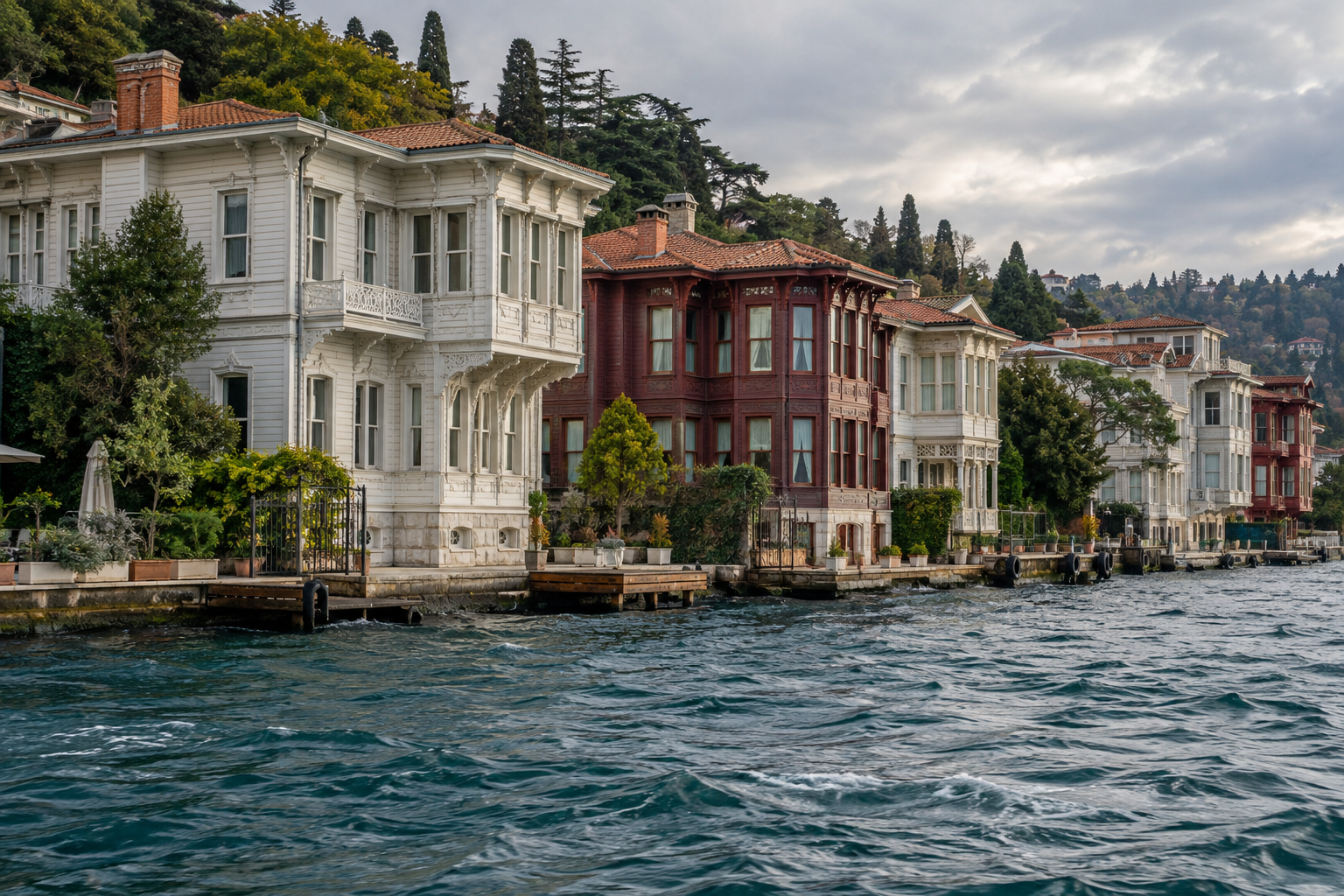
Image: pxef.com
The empire paid for it with borrowed money. The Ottoman state took its first foreign loans in 1854, during the Crimean War, and kept borrowing while the palaces went up. In 1875 it defaulted, and in 1881 its creditors took over a large part of its revenues through the Ottoman Public Debt Administration. Dolmabahçe was not the only cause, but it became the symbol of a court that built as if the money would never run out.
Mustafa Kemal Atatürk stayed here on his visits to Istanbul and died in a small bedroom on 10 November 1938, at 9:05 in the morning. The palace clocks are kept stopped at that time.
Beylerbeyi, Çırağan and Küçüksu
Across the water, below the first bridge, stands Beylerbeyi Palace, a summer palace built for Sultan Abdülaziz in the 1860s, in white marble, for receiving foreign royalty. Abdülhamid II, the last sultan with real power, was confined there after he was deposed and died there in 1918. Çırağan Palace, a little up the European shore from Dolmabahçe, was also built for Abdülaziz; it burned in 1910, stood as a shell for decades and since 1991 has been a luxury hotel. The small Küçüksu Pavilion, on the Asian shore near Anadolu Hisarı, was a hunting and resting lodge of the 1850s.
The Ottoman habit, revived
Modern Turkey has its own palace story. In 2014 Recep Tayyip Erdoğan moved into a new presidential complex in Ankara with more than a thousand rooms, built on land from the Atatürk Forest Farm despite court rulings that construction there should stop. In Istanbul he uses an office inside the Dolmabahçe complex and, on the Asian shore at Çengelköy, the Vahdettin Pavilion, an Ottoman mansion restored as a presidential residence. Since 2018 the National Palaces administration, which runs Dolmabahçe and Beylerbeyi, has answered to the presidency rather than to parliament.
The pattern is familiar from the 1850s. A ruler builds big while the currency falls and the debts pile up, and the bill goes to people who will never see the inside of the rooms. Turkey's inflation crisis since 2021 has hit pensioners and wage earners hardest. The palaces have been well kept.
The yalıs
Between the palaces stand the yalıs, the wooden waterfront mansions of Ottoman officials and merchant families. The oldest survivor is the Köprülü Amcazade Hüseyin Paşa Yalısı, near Anadolu Hisarı, built around 1699; only part of it still stands. Others, such as the red-ochre Sadullah Paşa Yalısı at Çengelköy, show the classic form: rooms built out over the water, boat houses underneath, gardens climbing the hill behind.
Most are private and some sell for tens of millions of dollars. Strict rules on building along the Bosporus, in force since the 1980s, have protected the shoreline better than much of the city. You see the yalıs best from the water (the ferry guide) or walking the shore road through the neighbourhoods at Arnavutköy, Yeniköy, Çengelköy and Kanlıca.
Dolmabahçe and Beylerbeyi are open to visitors most days, each closing at least one day a week, with separate tickets for the main sections; check the National Palaces website for current hours and prices before you go.