Bosporus Traffic in the First Half of 2026, 107 Ships a Day, Fewer Vessels and More Tonnage
Between January and June 2026, 19,277 ships passed through the Bosporus, according to Turkey's transport ministry. That is 107 a day, slightly fewer than in the same period of 2025 (19,381) and well below 2024 (20,780). Yet the ships carried more: their combined gross tonnage rose to about 301.5 million, up from 291.7 million a year earlier and second only to 2023 among the last four years. The long trend of fewer, bigger ships through Istanbul continues (traffic and transit rules).
What passed
General cargo ships were the largest group, 6,814 of them, followed by 3,757 bulk carriers and 2,069 container ships. Tankers made up a big share of the rest: 3,201 oil and other tankers, 899 chemical tankers and 392 liquefied gas carriers, about 4,500 in all, or nearly a quarter of the traffic. Many of them carry crude and fuel from Russia's Black Sea ports and Kazakh oil from the CPC terminal, part of it on ageing shadow-fleet tankers (the shadow fleet).
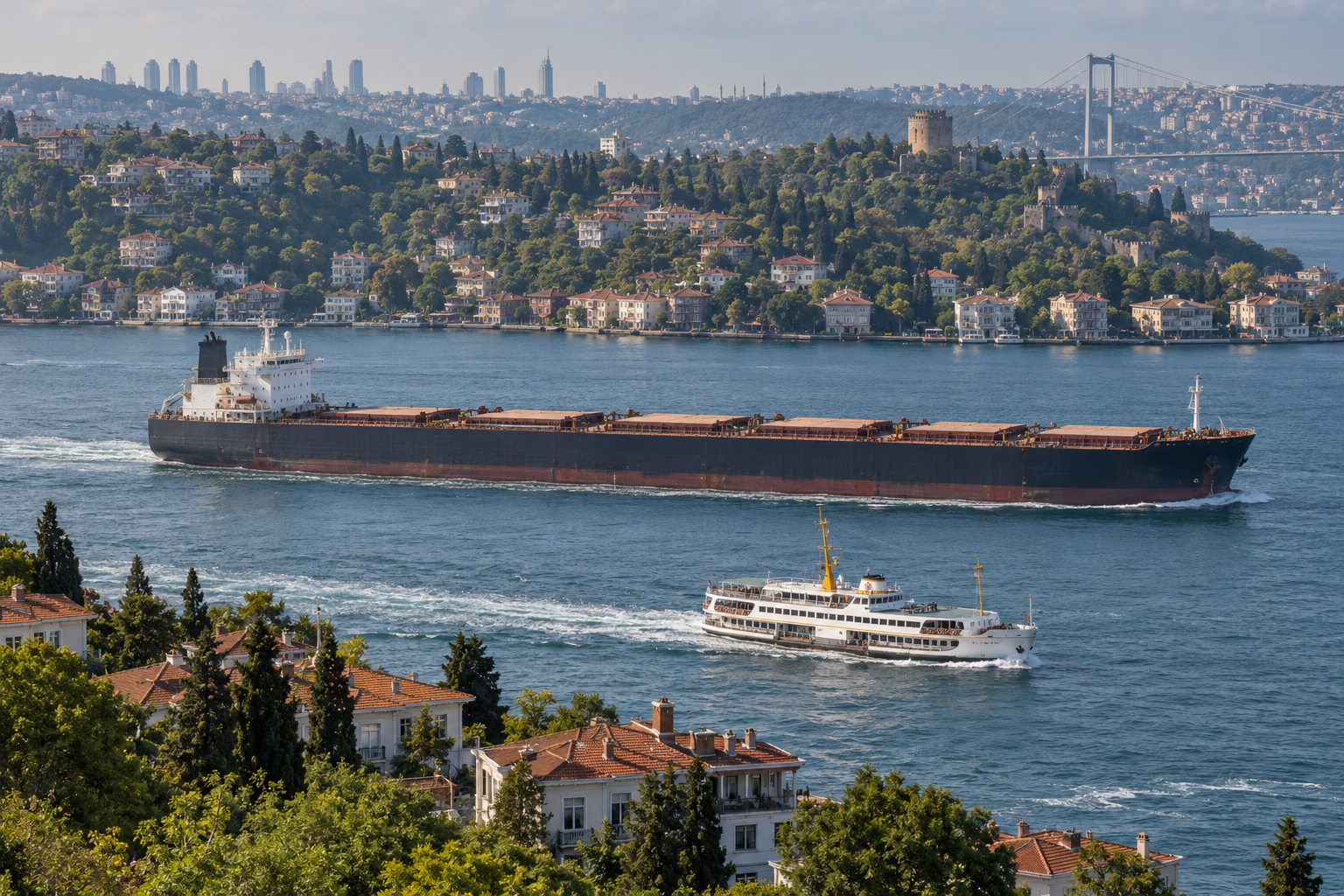
Image: pxef.com
The smaller numbers tell their own story. There were 283 livestock carriers. And only 20 warships passed in six months, under the tight rules Turkey has applied since February 2022, which bar the warships of countries at war except to return home (the Montreux Convention).
May was the busiest month, with 3,492 ships and 58.4 million gross tons; February the quietest, with 2,687 ships.
Bigger hulls
The size data matters most for safety. Of the six months' ships, 1,276 were between 200 and 250 metres long and 919 between 250 and 300 metres. In the first quarter no ship longer than 300 metres passed; in the second quarter, 26 did. Each of those very large ships has to swing through the bends at Kandilli and Yeniköy, where the current can reach seven or eight knots (the strait in numbers).
Pilotage stays voluntary for ships in transit under the Montreux Convention, but 12,254 of the 19,277 ships, about 64 percent, took a Turkish pilot. That is up from about 61 percent across 2025.
The war's mark
The figures show a strait that has absorbed the war in Ukraine without emptying. Grain still comes down from Odesa and the Danube, and Russian oil still comes out of Novorossiysk, even after Ukrainian strikes stopped loadings there for nine days in August. But the numbers for the second half of 2026 will be the real test. Since early October drones have struck at least seven merchant ships off Romania and Bulgaria, two of them sunk (Black Sea war and shipping), and war-risk insurance for Black Sea voyages has been repriced again and again.
Ships that pass without calling at a Turkish port pay Turkey's lighthouse fee, which rose to 6.70 dollars per net ton on 1 July 2026, more than eight times the 2022 rate. Ankara expected about 254 million dollars from passing ships in the year to June 2026.
We will update these figures when the ministry publishes the full-year numbers.