Turkish Black Sea Command in Beykoz, How Ankara Plans to Run Postwar Naval Security From the Bosporus
In Beykoz, on the Asian shore near the Bosporus's northern end, Turkey has set up the headquarters for the navy of a peace that doesn't exist yet. On 3 April 2026 the Turkish defence ministry announced a Maritime Component Command in Beykoz to lead the naval part of the Multinational Force Ukraine, the force Europe's "coalition of the willing" is preparing for the day Russia and Ukraine reach a settlement. Its core staff, all Turkish, had been in place since 25 August 2025.
The location says everything about how Ankara sees the Black Sea. Whatever navy protects Ukrainian shipping after the war, Turkey intends to command it, from the banks of the strait it controls.
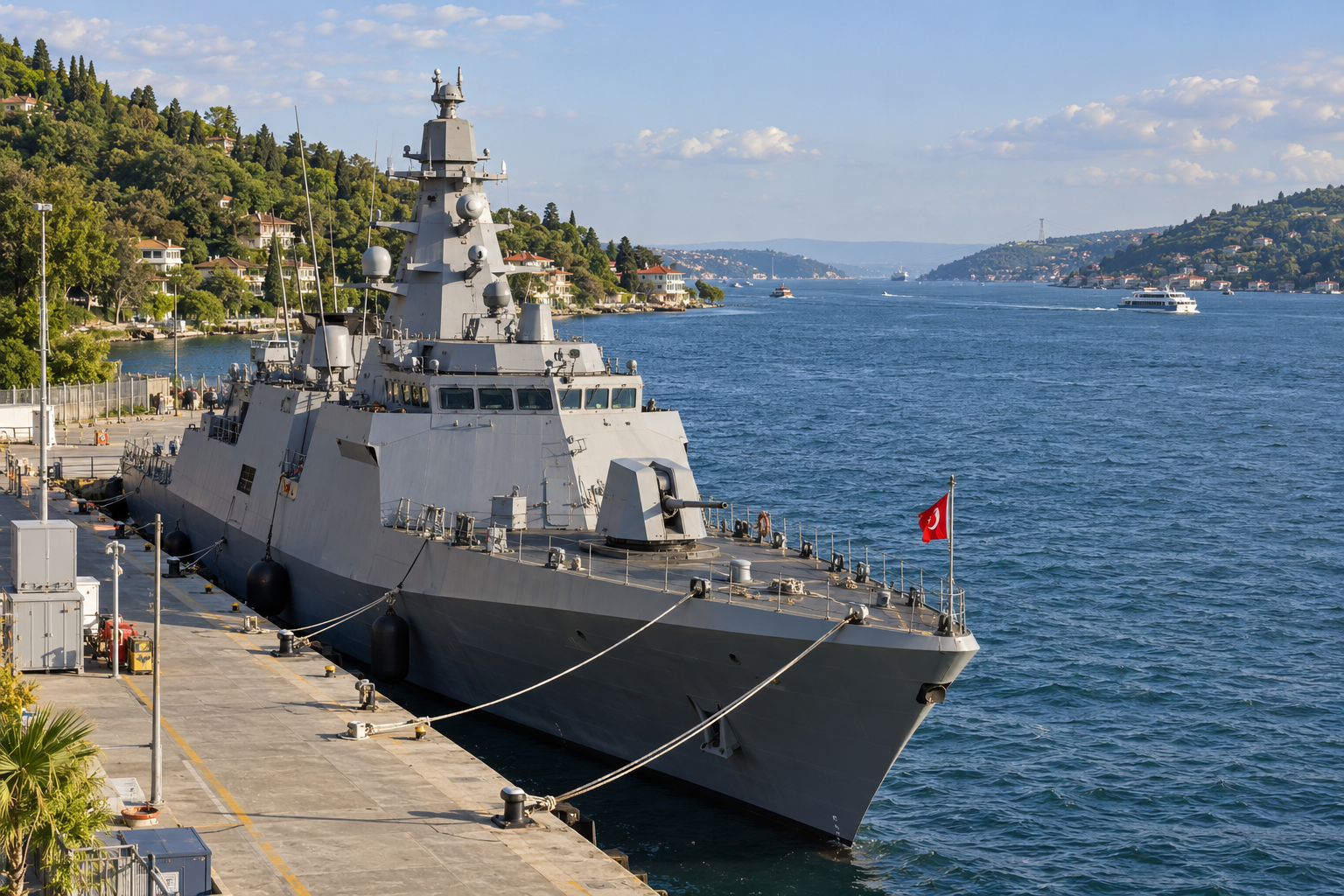
Image: pxef.com
What the coalition is planning
The Multinational Force Ukraine has its operational headquarters in Paris, under a French general with a British deputy, and 33 countries have said they are willing to take part. Its job, after a ceasefire or settlement, would be to deter a new Russian attack and help Ukraine rebuild its defences. The maritime piece is the hardest, because of the Montreux Convention. In wartime it keeps the warships of the countries at war out of the Turkish Straits, and at all times it limits how many ships non-Black Sea navies can bring in and for how long.
Turkey's answer is that only the countries on the Black Sea's shore will put ships to sea. Fourteen countries have said they will contribute to the Beykoz command, but only Turkey, Romania and Bulgaria are to provide the warships. Turkey's foreign minister, Hakan Fidan, said in January 2026 that Ankara would take on a Black Sea security mission once a final settlement is reached, and the defence ministry has said the command would preserve "regional ownership" and the balance set by the convention. Defence Minister Yaşar Güler has written that the initiative is not a NATO project and will stay under a Turkish commander.
Mines first
The three states already work together. Since July 2024 they have run a mine countermeasures group in the Black Sea, set up by a January 2024 agreement, with command rotating every six months. Hundreds of mines were laid in the war and many have drifted. In July 2026 the group's tasks were widened to protect undersea infrastructure, including cables and pipelines.
That has become more urgent since October 2026, when drone strikes on merchant ships off Romania and Bulgaria killed or left missing dozens of sailors (Black Sea war and shipping). Romania and Bulgaria want a bigger mission, able to escort convoys and police their waters, and a regional command that includes Turkey. That conversation is now happening in the middle of a war, not after one.
Who it serves
For Moscow, the Beykoz command is tolerable because it keeps the United States, Britain and France out of the Black Sea. The Russian embassy in Ankara went out of its way to praise Turkey's "balanced and responsible" handling of the convention. For Kyiv and its European backers, it is the price of getting any navy at all into a sea that the treaty closes to them.
For Recep Tayyip Erdoğan, it is the ideal position: indispensable to Europe, reassuring to Russia, and in sole command of the gate. It is also a reminder of how much Western security in the Black Sea now depends on the judgement of a government that jails its main political rival (the İmamoğlu case), keeps buying Russian oil products and lets Russia's shadow tankers pass (the shadow fleet).
Turkey has held the Bosporus fairly under the convention since 2022. The Beykoz command asks the West to trust that it will keep doing so, on Erdoğan's terms.